
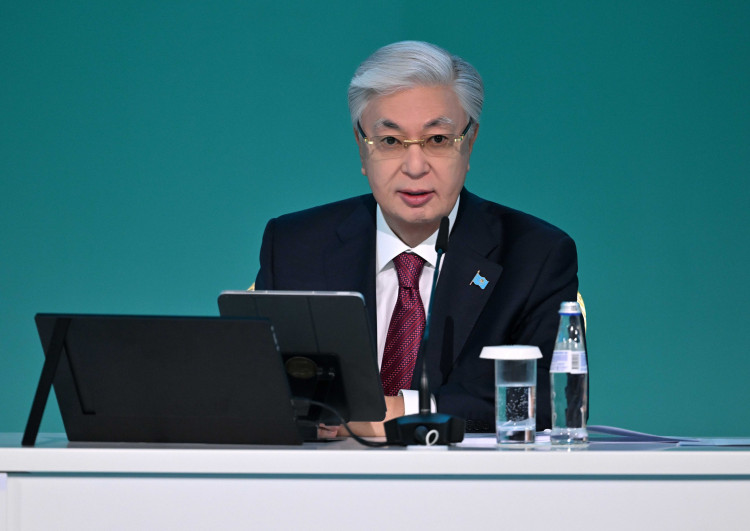
President of Kazakhstan Kassym-Jomart Tokayev is carrying out a large-scale transformation of the country’s political system, having chosen an evolutionary path of development based on institutional reforms and a carefully calibrated, step-by-step sequence of actions.
Since 2019, Kazakhstan has adopted nearly twenty laws aimed at modernizing its political system. Following the results of a nationwide referendum, constitutional amendments were introduced that redistributed powers among the branches of government. The role of Parliament has been strengthened, the accountability of the executive branch enhanced, and new judicial institutions have been established, including the Constitutional Court and courts of cassation.
A defining feature of the reforms has been their focus on practical outcomes. Democratic mechanisms are viewed not as formal procedures, but as tools to improve the quality of public administration. This approach reflects an understanding that political stability and legal predictability are of key importance.
Kazakhstan’s experience clearly demonstrates that profound political transformations are possible without abrupt upheavals, offering an alternative model of reform in a context of global instability.
The introduction of direct elections of heads of rural administrations has become one of the most significant reforms in Kazakhstan’s system of public administration. This process was implemented gradually over a five-year period, which helped avoid governance disruptions and allowed the system to adapt to new conditions.
Across the country, more than 2,300 heads of rural administrations have been elected, with an average age of 43. Notably, around one-third of them had not previously worked in public service.
The reform has given impetus to the development of political parties at the regional level and expanded opportunities for independent candidates. According to sociological surveys, the level of trust among rural residents in their heads of rural administrations exceeds 80 percent, indicating increased effectiveness and transparency of local governance.
By beginning democratization at the grassroots level, Kazakhstan is laying a solid foundation for the further expansion of citizen participation in decision-making.
January 7, 2026