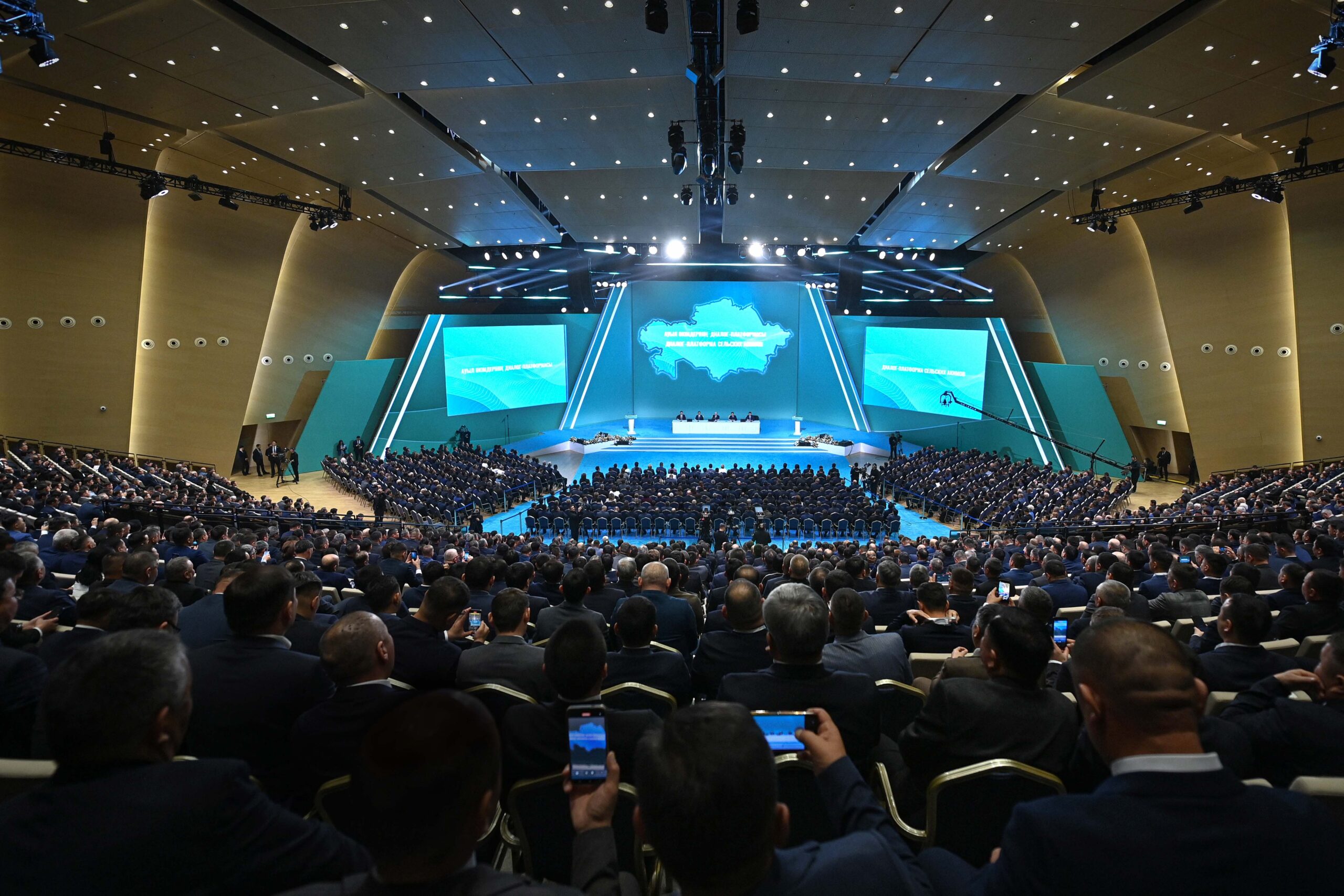
The President of Kazakhstan has set an ambitious goal for the country: to transform Kazakhstan into a fully digital state within the next three years. In his address at the dialogue platform of heads of rural administrations, Kassym-Jomart Tokayev defined digitalization not merely as a technological agenda, but as a strategic factor for the survival and development of the state. He placed particular emphasis on the fact that building a digital Kazakhstan is impossible without the full integration of rural areas and the agricultural sector. Digital platforms are expected to become key tools for improving governance efficiency, enhancing the quality of public services, and ensuring more precise allocation of resources.
In the context of the global technological race, Kazakhstan does not seek dominance, but clearly recognizes the risks associated with technological lag. Accelerated modernization is therefore viewed as a means of avoiding marginalization in the global knowledge-based economy.
The use of digital platforms and elements of artificial intelligence opens up opportunities to improve the efficiency of budget allocation, monitor agricultural production, forecast yields and risks, and enhance the transparency and accountability of local authorities.
The President also noted that in recent years a substantial infrastructural foundation has been laid for the digitalization of rural areas. Thousands of rural schools have been provided with high-quality internet access, access to digital services is expanding, and the level of self-sufficiency of rural districts is increasing.
These measures create the necessary conditions for the introduction of modern digital solutions in agriculture—from electronic accounting and logistics to online access to public services and educational resources.
Special attention in the address was given to the fact that digitalization of rural areas should help narrow the gap in living standards between rural and urban populations. The President stressed that digital technologies are capable of transforming daily life, access to services, and the economic opportunities available to rural residents.
In this context, digitalization is viewed not only as a technological process, but also as a social instrument aimed at strengthening internal stability and reducing regional disparities.
The President’s address directly links national objectives with global trends. References to large-scale technological initiatives undertaken by leading powers underscore an awareness that the technological race is systemic in nature.
At the same time, Kazakhstan does not claim aspirations for global technological leadership, but clearly articulates its core objective: to avoid being left on the sidelines of technological development. The President explicitly stated that there is no longer time for hesitation, and that digital modernization has become a matter of the nation’s future.
January 7, 2026